
Are you dealing with dandruff and wondering if zinc pyrithione is still a safe choice in your shampoo? This popular anti-dandruff ingredient has faced major changes due to safety concerns. In this post, we’ll break down the latest zinc pyrithione regulations by country, explain why some places have banned it, and suggest effective alternatives like piroctone olamine. Whether you’re a consumer, manufacturer, or just curious, we’ve made this easy to read with simple explanations.
目录
What Is Zinc Pyrithione and Why Is It Used for Dandruff?
Zinc pyrithione (often called ZPT or pyrithione zinc) is a common ingredient in anti-dandruff shampoos. It fights the fungus that causes dandruff, reducing flakes, itchiness, and scalp irritation. For years, it was a go-to in many products. But recent zinc pyrithione safety issues, including reproductive toxicity and potential DNA damage, have led to bans and restrictions worldwide.
If you’re searching for “is zinc pyrithione safe,” the answer depends on where you live. Let’s look at the key zinc pyrithione regulations.
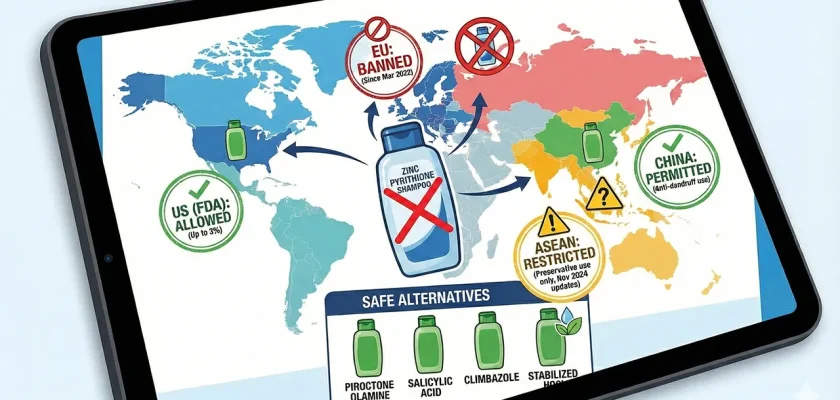
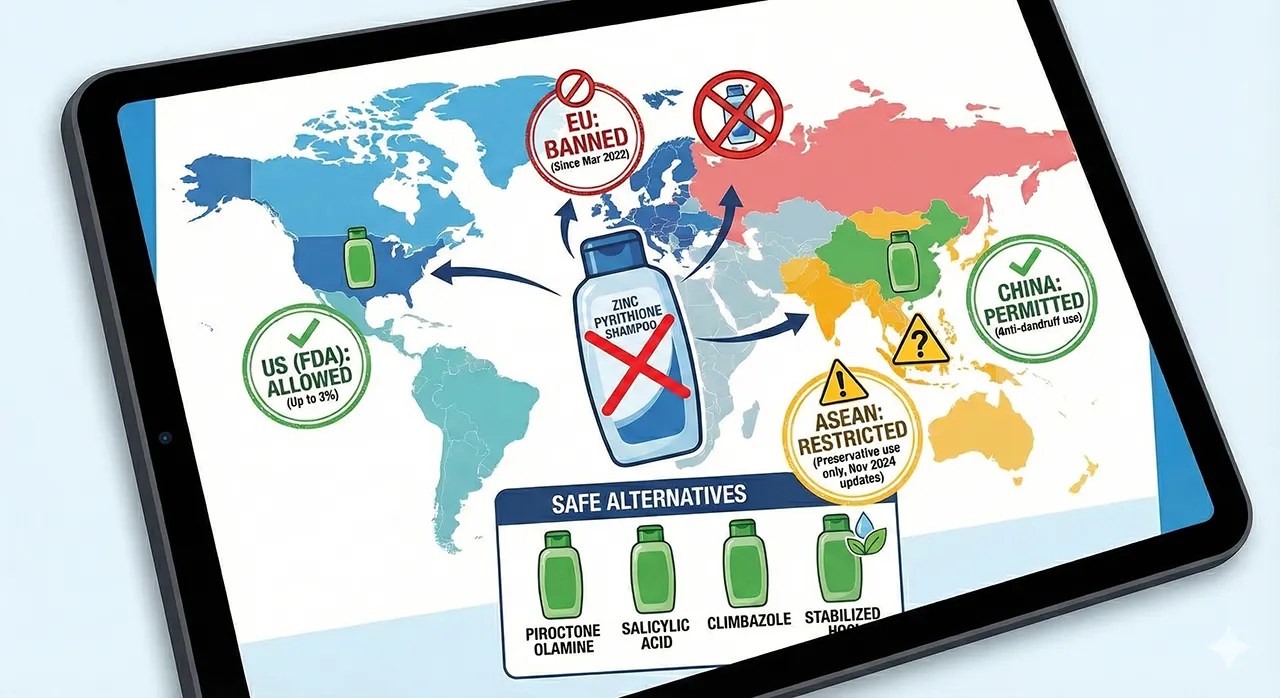
Quick Overview: Can You Use Zinc Pyrithione for Dandruff?
It varies by market:
- European Union (EU): ❌ Banned since March 2022 for all uses, including anti-dandruff and preservatives.
- ASEAN Countries (like Malaysia): ⚠️ Restricted – Mostly for preservatives only as of November 2024 updates, making anti-dandruff use tricky.
- United States (FDA): ✅ Allowed – Up to 2% in over-the-counter anti-dandruff products.
- China: ✅ Permitted – For anti-dandruff, antiseborrheic, and hair conditioning.
This zinc pyrithione ban in some areas stems from health risks, but alternatives are available everywhere.
Detailed Regulatory Breakdown by Region
1. European Union: Full Ban on Zinc Pyrithione
The EU banned zinc pyrithione completely in March 2022. It was removed from lists of approved substances due to:
- Classification as a reproductive toxicant (Category 1B).
- Risks of fertility damage and genotoxicity (DNA harm).
- Toxicity if swallowed.
Even though experts said it was safe at 1% in rinse-off shampoos, the EU decided alternatives exist, so no exemptions were given. All EU anti-dandruff shampoos had to reformulate. Popular replacements include piroctone olamine, selenium sulfide, ketoconazole, and salicylic acid.
If you’re in the EU, avoid products with zinc pyrithione – they’re no longer sold legally.
2. ASEAN and Malaysia: Complicated Restrictions
In ASEAN countries like Malaysia, zinc pyrithione regulations got stricter in November 2024. It’s now limited to “preservative use only” in cosmetics:
- Max concentration: 1% in hair products, 0.5% in others.
- Only for rinse-off items, not oral products.
The catch? Anti-dandruff use treats it as an active ingredient against scalp fungus, not just a preservative. This creates ambiguity:
- Strict view: No anti-dandruff claims allowed.
- Practical view: Some products still use it at 1% with vague labels like “healthy scalp” or “reduces flaking.”
Enforcement differs – Malaysia’s NPRA guidelines suggest transitioning away to avoid risks. Deadline for full compliance: November 19, 2026. Other ASEAN spots like Singapore are stricter, while Thailand and the Philippines have similar updates.
3. United States and FDA: Still Approved
In the US, zinc pyrithione is safe and approved by the FDA for dandruff control. You can use it up to 2% in shampoos. No ban here yet, but watch for future changes as global trends shift.
4. China: Fully Permitted
China allows zinc pyrithione for anti-dandruff purposes, with no major bans. It’s seen as effective for scalp health.
Zinc Pyrithione Alternatives: Safe and Effective Options
With the zinc pyrithione ban spreading, switch to these proven alternatives for dandruff treatment:
| Alternative | Max Concentration | Best For | Regulatory Status |
|---|---|---|---|
| Piroctone Olamine | 1% (rinse-off), 0.5% (leave-on) | Antifungal action against dandruff fungus | Approved in EU, ASEAN, US |
| Salicylic Acid | 3% (rinse-off hair products) | Removing flakes, reducing oil | Widely allowed, good for mild dandruff |
| Climbazole | 0.5% (shampoos), 0.2% (lotions) | Broad antifungal | Approved in most markets |
| Selenium Sulfide | Varies by country | Strong dandruff control | Restricted in some areas |
| Ketoconazole | 1-2% | Severe cases | Often requires prescription |
Studies show piroctone olamine works as well as or better than zinc pyrithione for reducing dandruff symptoms.
Recommended Anti-Dandruff Formula Without Zinc Pyrithione
Try this simple combo for an ASEAN-compliant shampoo:
- Piroctone Olamine: 1.0% (main antifungal)
- Salicylic Acid: 2.0% (flake removal)
- Climbazole: 0.5% (extra antifungal boost)
- Niacinamide: 2.0% (soothes inflammation)
This mix targets dandruff causes while being gentle on the scalp. It’s “zinc-free” and can command premium prices.
Action Plan: What to Do Next
- Check Your Products: Look for zinc pyrithione on labels. Note your market.
- For Manufacturers: Reformulate by Q3 2026 in restricted areas. Test stability with alternatives.
- For Consumers: Opt for piroctone olamine-based shampoos if worried about zinc pyrithione safety. Or check out our unique stabilized HOCl formulation for dandruff
- Future-Proof: Global trends suggest more bans – go zinc-free now.
Innovative ideas? Hypochlorous acid (HOCl) has antimicrobial properties and could pair with piroctone olamine for a new scalp treatment.
Final Thoughts on Zinc Pyrithione Regulations
Zinc pyrithione was a dandruff hero, but safety concerns like reproductive toxicity have led to bans in places like the EU and restrictions elsewhere. If you’re in a banned area, switch to alternatives like piroctone olamine for effective dandruff control. Stay updated – regulations change fast!
Note: This post is for informational purposes. Always check local regulations.

 Chinese
  English
  Malay
Malay